Intentional Torts to Persons Is Now Available
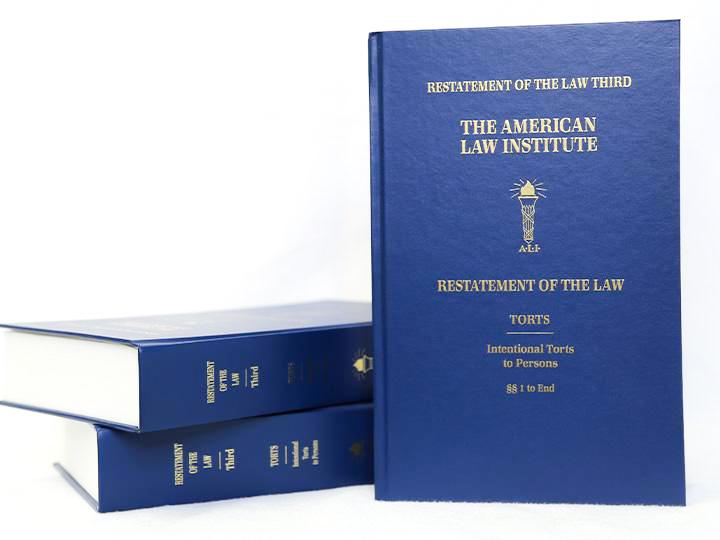
This is part of the Restatement Third, Torts, series that, when complete, will supersede Restatement Second, Torts. This volume updates coverage of physical and emotional harm to persons, with a focus on assault, battery, false imprisonment, including provisions on consent, self-defense, and other privileges.
Chapter 1. Definitions of Intentional Torts to Persons; Transferred Intent
Chapter 2. Consent
Chapter 3. Privileges
From the press release at the time of the project's final approval at an Annual Meeting:
“This Restatement deals with a sub-category of intentional torts,” explained Reporter Kenneth Simons. “It focuses on the traditional torts of battery, assault, false imprisonment, and also a newly named tort called ‘purposeful infliction of bodily harm.’ The project also covers transferred intent and different types of consent that preclude liability. We spent quite a bit of time trying to identify the most helpful categories for courts to use when analyzing when consent does or does not exist. We also developed detailed and updated criteria for different defenses, including self-defense, defense of property, and citizen’s arrest.”
The Reporters worked closely with a diverse group of Advisers and Members Consultative Group and produced more than 20 drafts from the inception of the project in 2012.
“We paid close attention to the Second Restatement, many provisions of which were identical to the First Restatement. But the reality is that there have been significant developments in the law and the fabric of society since 1934,” added Associate Reporter Jonathan Cardi. “For example, the definition of confinement is broader in our draft, making room for confinements by the mere assertion of legal authority. Also, with a more pervasive modern police force, privileges such as the defense of property and citizen’s arrest (along with their sparse and dated case support) were beginning to look a bit long in the tooth.”