In this episode of Reasonably Speaking, Robert H. Klonoff leads a discussion on one of the defining challenges in modern mass tort litigation: coordinating parallel proceedings in federal and state courts. Featuring John H. Beisner, Elizabeth J. Cabraser, and M. Casey Rodgers, the conversation explores why effective coordination matters to judges, plaintiffs, and defendants alike. Through examples drawn from complex litigation, the panel examines how courts and counsel navigate issues such as case management, bellwether trials, settlement, and other key stages of aggregate litigation.
Continue the Conversation at MDL in Motion.
The episode also offers a preview into the topics to be addressed at the ALI/NYU MDL in Motion 2026 conference, held at NYU School of Law on October 2. ALI members receive special registration rates to our CLE programs, including free virtual registration. Learn more about member discounts here (member login required).
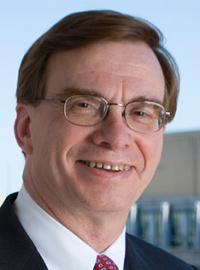
John H. Beisner
John H. Beisner is a partner in the Washington office of Skadden, Arps, Slate, Meagher & Flom, and leader of Skadden’s Mass Torts, Insurance and Consumer Litigation Group. John regularly handles appellate litigations and has appeared in matters before the U.S. Supreme Court. Over the past 35 years, he has defended major U.S. and international corporations in more than 600 purported class actions filed in federal courts and in 40 state courts at both the trial and appellate levels.
Those class actions have involved a wide variety of subjects, including antitrust/unfair competition, consumer fraud, RICO, ERISA, employment discrimination, environmental issues, product-related matters and securities. He also has handled numerous matters before the Judicial Panel on Multidistrict Litigation, as well as proceedings before various federal and state administrative agencies, particularly the National Highway Traffic Safety Administration and the Consumer Product Safety Commission.
John was elected to the ALI in 1994 and has served on ALI's Council since May 2009. He is an Adviser on the Restatement Third, Consumer Contracts project and was previously an Adviser on the Principles of the Law of Aggregate Litigation project. He has advised on numerous high-visibility corporate crisis situations, including congressional hearings, federal agency investigations, state attorneys general inquiries and General Accounting Office reviews. Among others, he represented Merck in its Vioxx litigation. He also negotiated a settlement with state attorneys general regarding the Countrywide Finance/Bank of America mortgage lending practices investigation, resulting in a creative loan modification program intended to help more than 400,000 families maintain ownership of their homes. He was named Litigator of the Week by The American Lawyer for his role in this case.
John is a frequent writer and lecturer on class action and complex litigation issues. In 2013, he received the Burton Award for Legal Achievement, which recognizes excellence in legal scholarship. He also has been an active participant in litigation reform initiatives before Congress, state legislatures and judicial committees. He has testified numerous times on class action and claims aggregation issues before the U.S. Senate and House Judiciary Committees (particularly with respect to the Class Action Fairness Act of 2005) and before state legislative committees. For his integral role in crafting the Class Action Fairness Act, John was recognized with the 2011 Research and Policy Award by The U.S. Chamber Institute for Legal Reform. He repeatedly has been selected for inclusion, and is in the top tier, in Chambers USA: America’s Leading Lawyers for Business in the area of products liability, and he also is listed in The Best Lawyers in America, The Legal 500 U.S., Who’s Who Legal, Best of the Best USA and Lawdragon 500 Leading Lawyers in America. He was profiled in an article by The American Lawyer that named Skadden as a finalist in the products liability section of its Litigation Department of the Year contest (January 2012).
John repeatedly has been named Best Lawyers’ Washington, D.C. Mass Tort Litigation / Class Actions - Defendants Lawyer of the Year, as well as a Star by LMG Life Sciences in the non-IP litigation and enforcement and products liability categories. He also was recognized as one of the 2013 BTI Client Service All-Stars by The BTI Consulting Group for providing outstanding client service. In addition, he was selected as one of Law360’s MVPs of 2019 and 2011 in the products liability category, which recognizes those who have raised the bar in corporate law throughout the year. In 2010, Law360 profiled John in two articles that named Skadden as a Product Liability Group of the Year and Class Action Group of the Year.

Elizabeth J. Cabraser
Under Elizabeth Cabraser’s leadership, Lieff Cabraser has become one of the country’s largest law firms serving clients seeking redress for financial and consumer fraud, anti-competitive practices, harmful drugs and products, environmental disasters, and illegal employment practices. For four decades, Elizabeth has made sure that our firm remains dedicated to its clients and its core values.
Possessing unparalleled expertise in complex civil litigation, Elizabeth has served as court-appointed lead, co-lead, or class counsel in scores of federal multi-district and state coordinated proceedings. These cases include multi-state tobacco, the Exxon Valdez disaster, Breast Implants, Fen-Phen (Diet Drugs), Vioxx, Toyota sudden acceleration, numerous securities/investment fraud cases, and Holocaust litigation.
More recently, Elizabeth has served in court-appointed leadership positions in several of the nation’s highest profile civil cases, including serving as a settlement class counsel in the Deepwater Horizon MDL, as Plaintiffs’ Co-Lead Counsel in the GM ignition switch defect litigation, and as Plaintiffs’ Lead Counsel in the Volkswagen “Clean Diesel” and Fiat Chrysler Ecodiesel Emissions MDLs.
She is also currently immersed in nationwide Opioids litigation. In January 2018, she was appointed to the Plaintiffs’ Executive Committee and Settlement Negotiating Committee in the National Prescription Opiates MDL, and in 2022 was appointed Plaintiffs’ Lead Counsel in the McKinsey & Co. National Prescription Opiate MDL. In addition, Elizabeth currently serves as a Plaintiffs’ Co-Lead Counsel in the Camp Lejeune Water Litigation.
Elizabeth has been repeatedly recognized as one of the foremost litigators in our nation, including being selected an unprecedented four times as one of the 100 Most Influential Lawyers in America by the National Law Journal, which has called her “a pillar of the plaintiffs’ bar.”

Robert H. Klonoff
Bob Klonoff is the Jordan D. Schnitzer Professor of Law and Dean Emeritus (2007-2014) at Lewis & Clark Law School. His areas of expertise include class action litigation, civil procedure, federal courts, appellate litigation, and criminal procedure. After graduating from Yale Law School, Bob clerked for the Honorable John R. Brown, Chief Judge of the U.S. Court of Appeals for the Fifth Circuit. He then served as an Assistant United States Attorney in D.C. and as an Assistant to the Solicitor General of the United States.
Bob served for many years as a partner at the international law firm of Jones Day, where he handled complex litigation at both the trial and appellate levels and also held the administrative post of chair of the pro bono program for all of the firm’s 20+ offices. He has extensive litigation experience. He has argued eight cases before the United States Supreme Court, including Gentile v. Nevada Bar and Kungys v. United States, and has argued dozens of cases in other federal and state appellate courts throughout the country. He has also tried dozens of cases (primarily jury trials). In addition, he has served as an expert witness in numerous class action and other aggregate cases, including the British Petroleum Deepwater Horizon Oil Spill litigation, the JUUL Labs Product Liability litigation, the National Football League Concussion litigation, the Volkswagen Clean Diesel litigation, the Wells Fargo Unauthorized Accounts litigation, the Equifax Data Breach litigation, the National Association of Realtors MLS Antitrust litigation, the NCAA Antitrust litigation, and the Parkland Shooting civil litigation.
Bob has represented clients on both the plaintiff and defense side in more than 100 class actions. For example, he served as co-lead appellate counsel in the U.S. Supreme Court class action case, TransUnion v. Ramirez and co-lead appellate counsel in the Sixth Circuit in In re National Prescription Opiate Litigation. He also serves as co-counsel for plaintiffs in the Aqueous Film-Forming Foams Product Liability litigation, the Social Media MDL litigation, and the Marriott Data Breach litigation. His pro bono cases have included death penalty, civil rights, and veterans’ rights cases.
A member of ALI for more than 20 years, Bob serves on the Institute’s Council, is Chair of Development Committee, and was an Associate Reporter for the class action project Principles of the Law of Aggregate Litigation.

M. Casey Rodgers
Judge Casey Rodgers began her federal judicial service on May 9, 2002, as a United States Magistrate Judge for the Northern District of Florida. On November 21, 2003, President George W. Bush appointed Judge Rodgers as United States District Judge for the Northern District of Florida, where she served as Chief Judge from 2011 to 2018.
She also served on the Judicial Conference of the United States Committee on Criminal Law from 2010 to 2017. She has been a member of the American Law Institute since 2013. During the past eight years, Judge Rodgers has presided over three multidistrict litigations: In re Abilify, In re 3M Combat Arms V2 Earplug, and more recently, In re Depo Provera. In April of 2026, she was appointed to the Judicial Panel on Multidistrict Litigation.
The below transcript of this podcast episode has been edited for clarity. Please excuse typos due to inaudible passages or transcription errors.
ALI: The views and opinions expressed on Reasonably Speaking are those of the speakers and do not necessarily reflect the policy or position of the American Law Institute or the speakers organizations. The content presented in this broadcast is for informational purposes only and should not be considered legal advice. Please be advised that episodes of Reasonably Speaking explore complex and often sensitive legal topics and may contain mature content. Welcome to Reasonably Speaking. This episode provides a sneak peek into some of the issues that will be addressed in the upcoming event, MDL In Motion, an ALI conference held in partnership with the Center on Civil Justice at NYU School of Law. Today's conversation is moderated by program chair Professor Bob Klonoff of Lewis and Clark Law School and features planning chairs John Beisner of Skadden, Elizabeth Cabraser of Lieff Cabraser, and Judge Casey Rodgers of the U.S. District Court for the Northern District of Florida.
Speaker biographies as well as details on the upcoming conference are available at ali.org. The conversation begins with Bob Klonoff.
Robert Klonoff: I'm delighted to be here and delighted to have all of you with me to discuss this exciting upcoming conference. Judge Rodgers, how did you come up with the idea of a conference on federal state coordination and MDLs? Well,
M. Casey Rodgers: First, let me say I'm really excited about the conference. We know how commonplace it is today for there to be parallel proceedings in both federal and state court in complex litigation. And so I thought it would be a great time to bring federal and state judges and lawyers together to discuss coordination. I'm thrilled that ALI and NYU agreed with me. I'm also happy to be here on this podcast. But the idea for the conference was truly a product of my own experience really. Well, I guess actually of my own inexperience and thinking that others might actually benefit from some discussions on the topic. All three of my MDLs that would be Abilify and then later 3M, and then more recently Depo-Provera, they've all been mass tort MDLs, but they've also all had parallel state court proceedings. And when I was assigned my first MDL that was Abilify 10 years ago, honestly, I didn't know anything about coordinating like this with the state court judge.
I had never had any experience working on a particular case with a state court judge in the past. So what I did when I got assigned Abilify was I reached out to a wonderful colleague whom we all know and love, Judge Eldon Fallon, for advice on general MDL case management. And one of the things that Judge Fallon recommended to me was that I reach out to the state court judge in New Jersey who was handling the parallel Abilify litigation there to see if he'd be interested in coordinating our two litigations with me. So not knowing what to expect, I took a chance and I called the state court judge, his name was Jim DeLuca. He turned out not only to be a genuinely wonderful person, but he was also a very smart judge. He had really good practical common sense when it came to case management.
And fortunately, he was all in for coordinating. And so we ended up, he and I, holding a joint science day in the Abilify litigation. We held joint case management conferences. We also coordinated an evidentiary hearing on general causation. Judge DeLuca had the Frye standard to apply. I had Daubert. It worked out just fine. We had one record, different standards. We didn't discuss our rulings with one another ahead of time, but we actually wound up reaching the same decision on general causation. And then we also had coordinated bellwether trials scheduled, but the parties reached a global settlement before any case was actually tried. But in the end, it was a wonderful, could not have been a better introduction for me into federal and state coordination. And so when the Depo Provera MDL landed on my desk last year, honestly, I didn't waste any time in calling on two of the state court judges who were handling the depo Provera cases, one in New York, Justice Sabrina Kraus, and the other in Delaware, Judge Kathy Vavala.
And the three of us have coordinated everywhere we can, case management conferences, early vetting orders, oral arguments on legal issues. They have been delightful to work with. And like Judge DeLuca in New Jersey, they're both very smart, no nonsense judges who simply want to move the cases in front of them. And to their credit, they've been more than willing to work together and with me to figure out where coordination made the most sense for all three of our courts. And then I brought those experiences with me to the ALI/NYU conference on multi-district litigation last year where you may recall we had a brief, but I felt productive panel discussion about federal and state coordination, but that wasn't the topic of the panel. It was actually the interview of Professor Miller. But after the panel, I was approached by Shannon McClure, who, as you know, is a lawyer.
She's married to Judge Joshua Roberts, who is a very experienced judge in Philadelphia who's handled a lot of complex litigation. Shannon and I casually discussed the idea for a full conference dedicated to federal and state coordination. She told me that she felt that Judge Roberts would likewise be very interested in such a conference. And so knowing that there was a broader interest in the topic, well, that really was all the push I needed. And although some of this has to be learned through trial and error, as I've learned it myself over the last 10 years, I thought how great would it be if we could take some of the guesswork out of it for others who may have never coordinated, may have never had the opportunity to coordinate or who may be new altogether to complex litigation. And I thought if we could do that by bringing together experienced judges and lawyers to have a conversation about it, it could be beneficial for all.
And I guess I'd like to add something if I could about the conference in terms of my vision for it. This really is an ongoing conversation. While my experience with the topic, practical experience with federal and state coordination has been nothing short of positive in every respect, I do recognize that there are some dissenting viewpoints out there and they need to be heard too, and they should be a part of the conversation and they will be a part of the conversation at the conference. So in the end, I felt like this conference would be an opportunity for all of us to openly discuss federal and state coordination, highlight the benefits of it, air any potential pitfalls, but hopefully, again, in the end, through the conversation, more judges, more lawyers will come to understand the benefits of coordinating where and when it makes sense to do so, and hopefully more will come to trust it as a process.
That's my goal for the conference.
Klonoff: Great. Thank you so much. Elizabeth, you've had incredible experience with cutting edge MDLs on the plaintiff's side. Is there a plaintiff view on the pros and cons of federal state coordination?
Elizabeth Cabraser: I'm not sure that there is a universal plaintiff view. It's really case specific, but I will say this. Over the years, those of us that have been involved in cases where federal state coordination has been successful have really come to see the benefits of it. It's a challenge, but in my view at least, it's a challenge that's well worth taking on and trying to make work simply because in a mass tort MDL, which is the type of an MDL that's most likely to have parallel state court litigation, the goal isn't just to get the discovery and the pretrial proceedings done in an efficient and non-duplicative manner. That's the wheelhouse of the MDL. It's also to get cases to trial or at least to the point of trial in order to facilitate and incentivize settlement in that same way. And that simply can't be done if the cases are scattered across the country completely uncoordinated.
The level of coordination that makes the most sense in a given litigation is really case specific. And in some cases, joint hearings on Daubert Frye, as Judge Rodgers mentioned, have been very, very successful in focusing the parties on the science and on the experts and have not only advanced cases to trials, but have facilitated resolution or even in a few cases dismissal. So more and more plaintiff's lawyers, I think particularly, have come to view federal state coordination as nearly a necessity in mass tort litigation. Look, we'd all love to be rulers of our own king and queendoms, but that is just not in the cards in modern litigation. And so we've learned over time that there are advantages to coordination, time and cost savings, pooling information, sharing experts, and being able to manage litigation that might comprise hundreds of thousands of cases.
Klonoff: I'd be interested in a couple of examples in your own cases where coordination has worked well, and also any examples, as Judge Rodgers pointed out, where maybe it doesn't work so well.
Cabraser: Well, I can tell you that of the traditional cases, I think the Bextra Celebrex litigation, which was a follow-on to the Vioxx litigation that Judge Fallon had, was very successfully coordinated. Judge Breyer was the MDL transferee judge, and he coordinated very closely with the mass tort proceedings in New York and New Jersey. We had a common special master, Fern Smith, who had just retired from the bench herself, first to handle all the discovery matters and then to mediate a universal settlement across all of the cases. And I'll say this, that was facilitated by the fact that in the wake of the MDL statute, a number of states, including California, New Jersey, Pennsylvania, Texas, came up with their own statewide MDLs or mini MDL systems because they too saw the benefit of at least pretrial centralization of cases sharing common questions of fact. And that in turn facilitates the state federal coordination because before that existed, a federal judge might need to coordinate with scores of state court judges across the country.
And nowadays, there are a few major hubs of state court litigation that makes it easier. I'll give you a very successful contemporary example, which is the social media litigation. The MDL is pending before Judge Yvonne Gonzalez Rogers in the Northern District of California, and the California state court coordinated proceedings are pending before Judge Carolyn Kuhl in Los Angeles. And the bellwether schedules in those two sets of litigation are coordinated. The two judges coordinate their hearings. They don't hold joint hearings, but they are very aware of each other's schedules and the lawyer's schedules, and the discovery has been largely coordinated. And just this week, the Attorney's General Bellwether trial halted in mid-bellwether trial for the announcement of a major settlement between the AGs and Meta. So there are benefits even when all of the plaintiffs in both sets of litigation don't share the same type of claims or they're not the same type of plaintiffs.
The fact of active coordination makes the discoveries quicker and it's possible to schedule more bellwether trials.
Klonoff: And examples where it hasn't worked so well from your perspective?
Cabraser: Well, there have been a number of cases in the past where the road to coordination was a rocky one, let me put it that way, because we were all learning. I can't think of an MDL situation in which it was an utter failure. I do think the recent and current roundup litigation may be an example where state federal coordination has been a tremendous challenge and I think perhaps hasn't lived up to its potential. But you have to remember in any big litigation like this, we're all human. Judges, lawyers, parties, we all have our personalities, we all have our philosophies, and coordination on any level, whether it's within a proceeding or whether it's across federal state lines, is going to depend on having active lawyers and judges in the litigation who are diplomats as well as advocates and who see that the value of coordination is worth what sometimes may be the difficulties in getting to that point.
Klonoff: John, let me turn to you. You've had many cutting edge MDLs representing defendants. What's your take on federal state coordination? And I'll ask the same question I asked Elizabeth, but from the defense perspective, is there a defendant view on coordination?
John Beisner: Yeah, I think the general defendant view is that coordination is extremely important because without it, there's just enormous waste, inefficiency, and great risks of inconsistent determinations on key issues in a matter. And I think that in order to try to get to some resolution, whether it be motions or through motions or through settlements or whatever, to get to that conclusion, coordination is critical. I agree with Elizabeth. I think most plaintiff's counsel are dedicated to coordination and join with defendants in most MDLs to try to find those efficiencies. I do fear though that increasingly there's a minority of plaintiff's counsel though who intend, they intentionally try to disrupt MDL proceedings by establishing competing groups of cases in state courts around the country. And I don't think it's a difficulty of coordination. I think it's an intention to disrupt those proceedings to give themselves independent status, whether it be on settlement or other issues.
They find ways to try to schedule trials, layer them on top of each other to be inconsistent with the schedule in the MDL proceeding to put maximum burdens on defendants. And I think the whole purpose is to try to achieve leverage with respect to settlement. And I think as a result, that's a major reason why many of our MDL proceedings, our mass tort proceedings are taking longer. It's not because of the inefficiency of the federal court administering the MDL. It's often because of the efforts of those that are involved in these competing state court proceedings to have their own way, chart their own path, refuse to participate in global settlements. That's a reason why there are legitimate complaints about how long some federal MDL proceedings last. It's because you can't get them to a conclusion because you need to do things more globally and the existence of these competing state court efforts undermine the ability to bring cases to resolution.
Klonoff: Do you have any examples where these competing interests have impacted negatively the coordination efforts?
Beisner: I think if you look at a number of fairly recent MDLs, there have been instances. In particular, I focus on cases where there are key decisions that are made by the federal court on threshold admissibility issues of causation evidence and so on, and a resolution will be reached and then suddenly large numbers of counsel will run away from the federal MDL proceeding and start anew to try to get different results in state court proceedings. And again, everyone is free to do that, but it is a problem and I think it causes the federal MDL proceeding often to fail of its essential purpose. I did want to note, echoing what Elizabeth was saying earlier, there have been some MDL proceedings that I think have been phenomenally efficient and well coordinated, and it's usually because of the creativity, personality, and the right touch by the federal judge running the MDL proceeding.
Two, I'll note, one goes back many, many years, but was one of the original grand coordination schemes, and this was the Firestone Tire Ford Explorer litigation. Elizabeth, you and I were both involved in that. And Judge Sarah Barker, Southern District of Indiana brought together a lot of state court judges for these massive hearings, not just on core issues in the case, but a lot of discovery issues that were common. And you'd get on the call, you'd make the argument, there'd be on the phone five or six state court judges. They'd all issue separate decisions, but it was just a site to behold that level of coordination. I think another key example is Judge Fallon and Vioxx, he was referenced earlier and certainly is the dean among MDL judges. But in the Vioxx litigation, I think people often forget that litigation had been going on for years before Judge Fallon was ever involved as the federal MDL judge.
There was no federal MDL proceeding, and these cases had been rolling along in state court in New Jersey elsewhere, but he did just a masterful job of drawing not only the parties, but the state court judges who were involved together, giving them very strong respect, support, and making clear to everyone that the judges were working together to achieve a resolution of that controversy. And it was a true global resolution in no small part because of his affable but persuasive capacity to get all of the other judges working together and work as a matter of equal dignity toward the resolution of that matter.
Klonoff: Great. The conference is going to cover a whole range of situations in which coordination makes sense from the beginning of the case to all the way through settlement. So I thought I'd give the three of you a chance to talk about phases of the case that are particularly amenable to coordination. And maybe Judge Rodgers, you can start with that given your extensive experience in coordination.
Rodgers: For me, and again, from my experience, case management is hands down the way to start with coordination. Case management can take a lot of different forms, it does, and it can impact the case in many stages. For instance, a coordinated data administrator or administration early on in a case can assist with case vetting early, and that can also in turn provide a seamless transition into a coordinated global settlement and then settlement administration from there. And we've seen that in Depo-Provera. We're seeing it now in Depo Provera. But I also, along the lines of case management, coordinated status conferences, coordinated discovery schedules, bifurcating and teeing up say general causation, for instance, in a toxic tort case, coordinating that together. In Depo Provera, we coordinated preemption and then also we coordinated general causation discovery. All of that went very smoothly with the parties proceeding on the same schedule and coordinating depositions and document production.
All three of our courts, the MDL as well as the court in New York and in Delaware, we were all going to hold a combined hearing on expert challenges on general causation. But given the settlement that was reached, much of the MDL and the New York litigation has been resolved. So Judge Vavla in Delaware went ahead and handled her hearing separately. And now for the cases that are not eligible for the settlement, the global settlement in both the MDL and in New York, we have a joint hearing scheduled in a couple of weeks. So case management in my view is important from the word go. If you can coordinate with a judge who has parallel state court proceedings, that's not always possible. Obviously these litigations don't start at the same time on the same timetable, but the earlier, the better in my view. And then how much and whatever can be coordinated along the way will inform a resolution at the end, hopefully, if that's where the litigation ends up.
Early case vetting, which is obviously part of case management, has also been proven highly effective in the Depo-Provera litigation. In my view, all three of the judges entered early case vetting orders requiring the parties to provide proof of use and proof of injury within 120 days of filing or transfer. And also on the same topic of case management, all three courts use the same data administration firm to help with that vetting process. And that has, in my view, proven to be invaluable. And at the case management conferences, all three of us are given an overview of the status of the litigation and their respective or our respective courts, particularly with regard to the vetted claims. And again, that's now being used in settlement administration. Also, I would note that the three courts use of the same data administration firm has eliminated the nightmare of duplicate claims.
I think that's something worth both sides of the V and the court all taking note of. But in my view, I think case management is definitely where it should start. Coordinated sequence bellwether trials. I haven't had the opportunity to actually coordinate with a state court in that area. I almost did in Abilify, but again, the global settlement was reached before we tried any cases, but we were set for that. And I think that definitely can and should be done where possible.
Klonoff: Elizabeth, do you want to weigh
Cabraser: In? Sure. And I won't repeat anything that Judge Rodgers said because I think all those things are very, very important. I think it's also important at the very outset of the litigation or the courts that are going to be involved in coordinating with each other to make sure that the plaintiff's side leadership that they appoint are also interested and willing to coordinate. In fact, it often works best if those in the plaintiff's leadership structure also have cases in state court and vice versa. Frequently, we do in a mass tort. Not all cases are recoverable. Some are filed in federal court, some are filed in state court. And to have that intersection in the plaintiff's leadership group assures, it doesn't assure, but it helps to ensure that one system isn't going to run off on its own without coordinating with the other and that there are shared interests in seeing all of the litigation work.
That also facilitates in coming up with uniform plaintiff's fact sheets, coming up with uniform master complaints or short form complaints. All of the administrative details that Judge Rodgers talked about which make up successful case management are facilitated if you have those in leadership positions on the plaintiff's side in active coordination with each other. There used to be a 100% sure solution to achieving optimal federal state coordination, and that was simply to appoint the late great Dawn Barrios as federal state liaison. And she was a brilliant lawyer, a great advocate, but she was a diplomat, par excellence, and she was a wonderful listener and could bring people together. There's always a premium on personalities like that. It's a little scary to think that these important high stakes multi-jurisdictional cases depend in large part on such human factors, but they do. And there are ways for courts to encourage and incentivize the right people to be placed in the right positions on both sides of the V, so that the cooperation which needs to go on.
Look, we'll fight about the important things. We'll fight about the merits. We're all advocates, but we don't need to fight about the little things. We don't need to fight about procedure. We don't need to multiply and duplicate expense. We certainly don't need to be duplicating much of the discovery. And so at every stage of the case, having the right people involved in making the decisions and making the proposals and negotiating with each other can help this run more smoothly.
Klonoff: John?
Beisner: I'd make two points because I think this has been covered very well by those of you who've spoken already. But two points I'd make is I just want to, I wouldn't say disagree, but just offer an alternative viewpoint on one thing Elizabeth said, and that is the notion of plaintiff's counsel being involved both in the federal and state proceedings. I actually think coordination historically has been strongest in cases where the MDL judge said to applicants for leadership positions on the plaintiff's side in the MDL proceeding that I expect you to litigate your cases in the MDL proceeding. I don't want to be seeing you litigating these cases in state court. These usually weren't statements by order, although I do remember some MDL proceedings where - There were
Cabraser: Orders.
Beisner: Yeah. And sometimes it was more just a statement or an expression of an intent by the court. But as you said, Elizabeth, I do remember some instances where the MDL court issued orders to show cause why a particular attorney shouldn't be removed from leadership because he or she was litigating in state courts in a manner inconsistent with what the federal proceeding said. So there's a tension there. And I understand, Elizabeth, I think your point's well taken about if you have plaintiff leadership that's kind of watching what's going on in both proceedings, it may be helpful, but I think the temptation to sort of shift back and forth between the two may deter coordination to some extent. The one other thing I note, and Judge Rodgers mentioned this, In her summary, but I'd also stress the bellwether coordination factor. And it may not be so much coordination of the trials, but making sure that they are scheduled and phased in a manner that doesn't disrupt the overall litigation.
What concerns me is, as I mentioned earlier, there are some mass tort controversies in which those who are focusing on state court litigation, I think go out of their way to schedule trials, to be inconsistent with the timing of the federal trials, to put greater burdens on the defense counsel, to make it difficult to get their experts where they need to be if there are two or three trials going on at the same time, get counsel where they need to be, and so on. And so I think the extent to which the federal court can work with state courts just to come up with a schedule that is reasonable to allow the focus of the litigation to move from one bellwether trial to another in an efficient manner is a key element of the coordination process.
Klonoff: Great. Thank you. Those were excellent comments. I want to close by talking specifically about the conference. We don't have time today to talk about all of the incredible speakers who are going to be appearing, judges, academics, and practicing lawyers. I will say that several of the judges who've been mentioned today will be there giving their views, and so I'm very excited about that. But I wanted to focus in the limited time we have left on our three keynote speakers, and they're really an incredible group. Starting with you, Judge Rodgers, can you talk about Judge Robin Rosenberg?
Rodgers: It's a pleasure to talk about Judge Rosenberg. In a word, she's a powerhouse. She was a powerhouse as a state court judge for seven years in Florida, and then as a federal district court judge for 10 years in the Southern District of Florida. Judge Rosenberg is continuing that tradition as a powerhouse in her new role as director of the Federal Judicial Center. We are really fortunate as a judiciary to have her in that role. She has a lifetime of dedication to civic education and she's also passionate about research, so we're really lucky to have her there. She's also a very busy person these days. And so as a conference, we're fortunate to have her on the schedule. She understands this topic of federal and state coordination very well, having presided over the Zantac MDL. So she has sort of a boots on the ground perspective on federal state coordination.
And also as director of the Federal Judicial Center, again, a prestigious honor for her. But in that role, she has a 30,000 foot policy view of our topic at a systems level. And of particular relevance, Judge Rosenberg is a member of the editorial board, busy preparing the highly anticipated next edition, the fifth edition of the Federal Judicial Center's manual of complex litigation. I believe that's due to be out or due to be published, released late this year or early in 2027. And that manual, of course, will include a chapter on this exact topic. So I don't think we could ask for anything more in a judge presenter for our conference. With all of this under her belt, I'm confident that Judge Rosenberg will bring a unique perspective to our conference. And she's also a dear friend and a lovely person, and I know that everyone's going to want to hear from her.
So I'm really excited she's going to be with us.
Klonoff: Thank you. John, can you talk about your good friend Ken Feinberg, who I know you've had many dealings with?
Beisner: Well, I will start by saying that I would bet any amount of money that no one has ever fallen asleep during a Ken Feinberg presentation. For those who have not had the pleasure of listening to Ken, he's an extremely energetic speaker. I hesitate to start with that because it retracts arguably from the substance of what Ken has to say, which is also something that deserves considerable accolades as well. If you think about what Ken has done over the years, I mean, any seat that there is in a mass tort controversy or an MDL controversy, Ken has at some point occupied it and he's had unique seats in various things such as the payment mechanism for nine eleven victims that was a federal program that he administered. But he's just had so many perspectives on the manners in which controversies can be resolved, has brought so much creativity to that.
He's just seen it all. And what's wonderful about it is he has just this wonderfully effective way of sharing that experience with those in the audience. So even though I've heard Ken present on many topics in many different occasions, I can't wait to see this one because he never fails to please in doing these sorts of programs.
Klonoff: Thank you. And Elizabeth, can you talk about the legendary Arthur Miller?
Cabraser: I am not worthy. Where do I begin? Professor Miller is legendary. He was there at the birth of the modern rules of federal civil procedure. Indeed, he assisted, I think, to a great extent in shaping those rules. Treatise, author, lecturer, teacher, advocate, one of the great oralists, a wonderful rack and tour, wonderful storyteller, and a great interviewer. He's put me on the spot a number of times. I think of him as the embodiment of federal civil procedure and the federal rules. I can't help it. That's the visual that I get in my mind, but he's not pretentious, quite the opposite. And I've always been impressed by his abiding belief that the federal court should be accessible to all, that the federal rules were the conduits of that accessibility, and that the federal courts are the courts of the people. He is the most urbane three-piece suit wearing populist I can imagine, and he's just a treat to listen to.
He's captivating.
Klonoff: Well, thank you to all of you for your comments. And if you found these comments interesting, I would encourage you to attend the conference. It's really going to be a stellar event. Seating is limited, so I would encourage you to sign up as soon as you can. Thank you very much.
ALI: Thank you for tuning into Reasonably Speaking. To learn more about this year's MDL in Motion Conference, visit ali.org.