Learned Hand
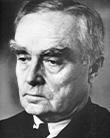
Billings Learned Hand (1872–1961) was an American judge and judicial philosopher. He served on the U.S. District Court for the Southern District of New York and later the U.S. Court of Appeals for the Second Circuit. Hand has been quoted more often by legal scholars and by the Supreme Court of the United States than any other lower-court judge.
In addition to being one of the most cited and respected jurists in American history, he became known outside the legal profession during World War II after giving a short address in Central Park about tolerance. He is often described as a defender of civil liberties and a pioneer of modern approaches to statutory interpretation. His decisions in specialist fields—such as patents, torts, admiralty law, and antitrust law—set lasting standards for craftsmanship and clarity. On constitutional matters, he was both a political progressive and an advocate of judicial restraint. He believed in the protection of free speech and in bold legislation to address social and economic problems. He argued, however, that the U.S. Constitution does not empower courts to overrule the legislation of elected bodies, except in extreme circumstances. Instead, he advocated the “combination of toleration and imagination that to me is the epitome of all good government.”