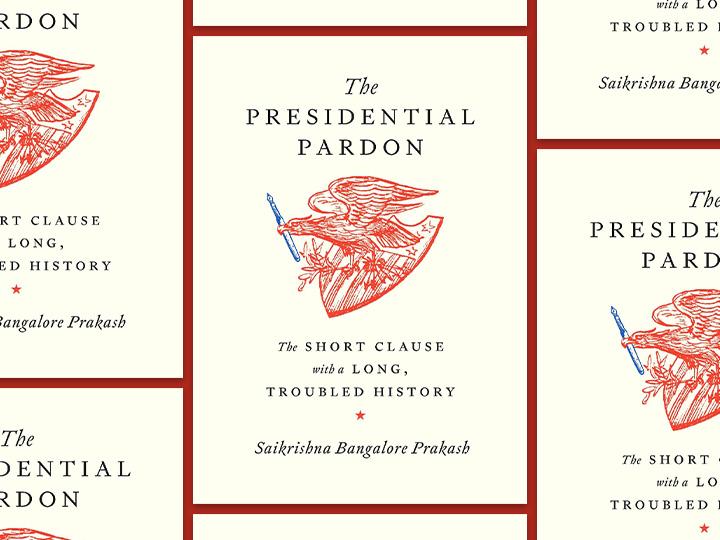
Saikrishna Bangalore Prakash of UVA School of Law, an expert on executive powers, delves into the transformation of executive pardons into a political tool in his new book The Presidential Pardon: The Short Clause with a Long, Troubled History.
The Constitution’s Pardon Clause grants the president a power unmatched in scope and consequence. In The Presidential Pardon, legal scholar Saikrishna Prakash explores how this brief clause has grown into the most expansive and controversial tool of the modern presidency.
Originally intended as a mechanism of mercy—to temper harsh laws and foster reconciliation—the pardon was once used with solemnity and circumspection. Today, it has evolved into a blunt and potent political instrument. Presidents use it to shield allies, reward supporters, fulfill campaign promises, and make political statements. In January 2025, for instance, the outgoing and incoming presidents issued major pardons—one to protect relatives and allies, the other to deliver on a pledge to his electoral coalition. These actions mark a turning point: the pardon power is no longer a curious exception to politics but increasingly a feature of it. Pardons have become a continuation of politics by other means.
Prakash, a preeminent expert on constitutional law and the executive branch of government, delivers an engaging and accessible analysis of this transformation. The Presidential Pardon brings together little-known history, sharp political insight, and learned constitutional interpretation in a timely examination of executive power. As the partisan exercise of pardon grows more routine, Prakash asks: Can our rule of law survive a presidential power that is checked by no one?
Learn more about The Presidential Pardon in this UVA Law article and the video below.
Prakash talks about his new book The Presidential Pardon (video courtesy of UVA Law).