The 2026 Election: What Worked, What Didn't, and What's Next
Episode premieres on Wednesday, December 2.
The 2026 midterm elections unfolded amid heightened political tensions, concerns about federal intervention, and significant legal challenges. Yet Election Day itself was relatively uneventful. So, what lessons can be drawn for future elections?
In this episode of Reasonably Speaking, Samuel Issacharoff moderates a discussion with leading election law scholars Richard Hasen, Lisa Marshall Manheim, and Derek Muller, examining this year's election, the judiciary's response to election-related disputes, and the evolving legal principles governing election litigation.
The panel explores the balance between judicial intervention and restraint, the procedural doctrines that shape election disputes, and the Supreme Court's use of its emergency docket. While the participants largely agree that courts successfully avoided disrupting routine election administration, they offer differing assessments of decisions involving voting rights, redistricting, and campaign finance.
The conversation considers what worked, what remains contested, and what lies ahead for election law and American democracy.
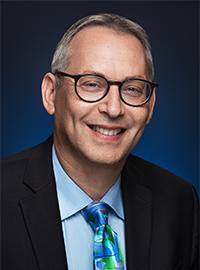
Richard L. Hasen
Richard L. Hasen is the Gary T. Schwartz Distinguished Professor of Law, Professor of Political Science (by courtesy), and Director of the Safeguarding Democracy Project at UCLA School of Law. He is an internationally recognized expert in election law, writing as well in the areas of legislation and statutory interpretation, remedies, and torts. He currently serves as co-Reporter on ALI’s Restatement of the Law Third, Torts: Remedies. He is also an Adviser on the Restatement of the Law, Election Litigation project and served as an Adviser on the Restatement of the Law Third, Torts: Miscellaneous Provisions (published in 2026).
Hasen is co-author of leading casebooks in election law and remedies. He served in 2022 and 2024 as an NBC News/MSNBC Election Law Analyst. He was a CNN Election Law Analyst in 2020.
From 2001-2010, he served (with Dan Lowenstein) as founding co-editor of the quarterly peer-reviewed publication, Election Law Journal. He is the author of over 100 articles on election law issues, published in numerous journals including the Harvard Law Review, Stanford Law Review, Supreme Court Review, and Yale Law Journal.
Hasen was named a 2026 Guggenheim Fellow, recognizing prior career achievement and exceptional promise. He was also named one of the 100 most influential lawyers in America by The National Law Journal in 2013, and one of the Top 100 Lawyers in California in 2005 and 2016 by the Los Angeles and San Francisco Daily Journal.
His op-eds and commentaries have appeared in many publications, including The New York Times, Wall Street Journal, The Washington Post, Politico, and Slate. Hasen also writes the often-quoted Election Law Blog, which the ABA Journal named to its “Blawg 100 Hall of Fame” in 2015. The Green Bag recognized his 2018 book, The Justice of Contradictions: Antonin Scalia and the Politics of Disruption, for exemplary legal writing, and his 2016 book, Plutocrats United, received a Scribes Book Award Honorable Mention. His 2022 book, Cheap Speech: How Disinformation Poisons Our Politics—and How to Cure It, was named one of the four best books on disinformation by the New York Times. His new book, A Real Right to Vote: How a Constitutional Amendment Can Safeguard American Democracy, was published by Princeton University Press in February 2024.
Hasen holds a B.A. degree (with highest honors) from UC Berkeley, and a J.D., M.A., and Ph.D. (Political Science) from UCLA. After law school, Hasen clerked for the Honorable David R. Thompson of the United States Court of Appeals for the Ninth Circuit, and then worked as a civil appellate lawyer at the Encino firm Horvitz and Levy.
From 1994-1997, Hasen taught at the Chicago-Kent College of Law and from 1998-2011 he taught at Loyola Law School, Los Angeles, where he was named the William H. Hannon Distinguished Professor of Law in 2005. From 2011-2022, Hasen was Chancellor’s Professor of Law and Political Science at the University of California, Irvine and Co-Director of the Fair Elections and Free Speech Center. He was a visiting professor at UCLA Law twice before joining the faculty in 2022.
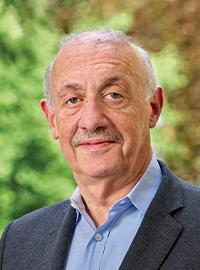
Samuel Issacharoff
Samuel Issacharoff is the Bonnie and Richard Reiss Professor of Constitutional Law. His wide-ranging research deals with issues in civil procedure (especially complex litigation and class actions), law and economics, constitutional law, particularly with regard to voting rights and electoral systems, and employment law. In addition to serving on ALI's Council, he is an Adviser on ALI's Restatement of the Law, Election Litigation project.
He is one of the pioneers in the law of the political process, where his Law of Democracy casebook (co-authored with Stanford’s Pam Karlan and NYU’s Rick Pildes) and dozens of articles have helped to create a vibrant new area of constitutional law. He is also a leading figure in the field of procedure, both in the academy and outside. He served as the Reporter for ALI's Principles of the Law, Aggregate Litigation.
Issacharoff is a 1983 graduate of the Yale Law School. After clerking, he spent the early part of his career as a voting rights lawyer. He then began his teaching career at the University of Texas in 1989, where he held the Joseph D. Jamail Centennial Chair in Law. In 1999, he moved to Columbia Law School, where he was the Harold R. Medina Professor of Procedural Jurisprudence. His published articles appear in every leading law review, as well as in leading journals in other fields. Issacharoff is a fellow of the American Academy of Arts and Sciences.
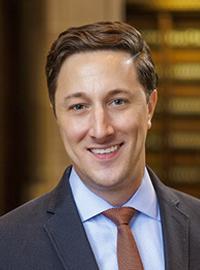
Derek T. Muller
Derek Muller, Professor of Law at Notre Dame Law School, is a nationally-recognized scholar in the field of election law and federal courts. His research focuses on federalism issues, particularly in election administration, ballot access, and the Electoral College. He serves as the co-Reporter on ALI's Restatement of the Law, Election Litigation.
He has published more than thirty academic works, and his op-eds have appeared in the New York Times, the Los Angeles Times, and the Wall Street Journal. He has testified before Congress, and he is a contributor at the Election Law Blog. He is a co-author on a Federal Courts casebook published by Carolina Academic Press.
At Notre Dame, Muller teaches Election Law, Civil Procedure, Evidence, and Federal Courts.
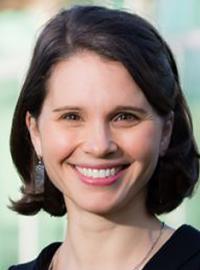
Lisa Marshal Munheim
Lisa Manheim is the Charles I. Stone Professor of Law at the University of Washington School of Law. She writes in the areas of constitutional law, election law, and presidential powers. She serves as co-Reporter on ALI's Restatement of the Law, Election Litigation.
Manheim’s scholarship, which explores questions of federalism and institutionalism in the context of elections, has been published in the University of Chicago Law Review, the Supreme Court Review, the Vanderbilt Law Review, and other leading academic journals. She has appeared, on air or in print, in a range of national and international news outlets, and her opinion pieces have been published in the New York Times and the Washington Post, among other publications.
Her courses include Administrative Law, Constitutional Law, Election Law, Federal Courts, and Legislation. She is a five-time recipient of the Philip A. Trautman Professor of the Year Award given by the student body.
Manheim earned her B.A., summa cum laude, from Yale College and her J.D. from Yale Law School, where she served as Managing Editor of the Yale Law Journal. After graduating from law school, Manheim clerked for Judge Pierre N. Leval of the United States Court of Appeals for the Second Circuit and Justice Anthony M. Kennedy of the United States Supreme Court. Prior to joining the faculty at the University of Washington, Manheim worked as an associate at Perkins Coie LLP, where she specialized in appellate practice, commercial litigation, and political law.